In the field of industrial fluid control, valves are not the only components at work; a variety of auxiliary fittings are also essential. When transporting highly corrosive fluids, it is not enough for valves alone to be corrosion-resistant—all other piping components must also be capable of withstanding exposure to various strong acids, strong bases, and organic solvents.
This article introduces five types of piping components—pipeline sight glasses, strainers, lined straight pipes, lined elbows, and lined tees—to help you gain a better understanding of these essential parts.
Pipeline Sight Glasses
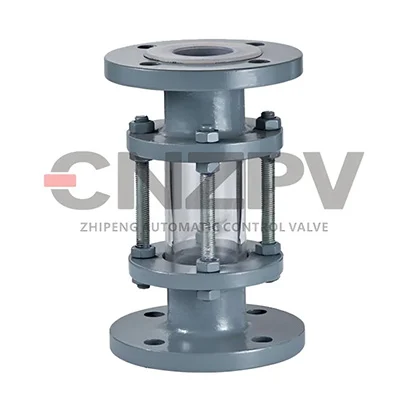
A pipeline sight glass is a transparent window or tube installed within a piping system or vessel, allowing for the visual observation of industrial processes. These are commonly used in fluid systems and equipment to monitor liquid levels, flow rates, and the presence of bubbles or impurities. Sight glasses provide operators with a quick and convenient way to assess the status and performance of a system without the need for physical contact or disassembly.
CNZPV offers a range of sight glasses suitable for both industrial and sanitary process applications.
Strainers
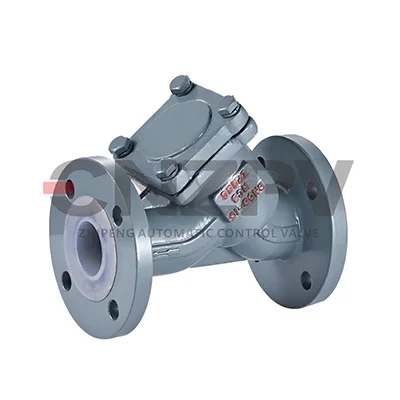
Strainers are installed in pipelines to remove impurities from flowing liquids, thereby protecting downstream equipment from damage. They are typically used in conjunction with valves and other auxiliary components.
CNZPV provides strainers lined with PTFE, FEP, or PFA. These strainers are specifically designed for handling highly corrosive chemical media. In many operating conditions, using components made from high-alloy materials is significantly more expensive than using lined alternatives. Consequently, employing lined strainers not only protects costly equipment and extends its service life but also ensures superior operational performance for the entire system.
Lined Straight Pipes
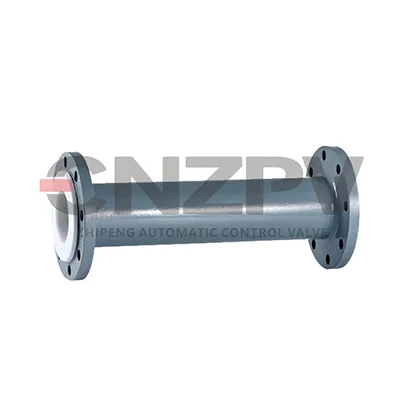
Lined straight pipes are composite piping components widely used in industrial fluid transport. They consist of an outer pressure-bearing substrate—typically carbon steel or stainless steel—with an inner surface uniformly lined with corrosion-resistant and wear-resistant materials, such as fluoroplastics, ceramics, or rubber.
These components combine the mechanical strength of a metal outer shell with the specialized properties of an internal lining. The lining material can be flexibly selected based on the characteristics of the conveyed medium: fluoropolymer linings are suitable for highly corrosive environments (such as those involving strong acids or bases), ceramic linings are ideal for transporting highly abrasive slurries, and rubber linings are designed for applications involving high-impact slurries. They operate across a temperature range of -40°C to 230°C and can typically withstand pressures up to 1.6 MPa.
The CNZPV fluoropolymer-lined piping system offers a variety of fluoropolymer lining options, including PTFE, PFA, FEP, and anti-static variants.
Lined Pipe Elbows
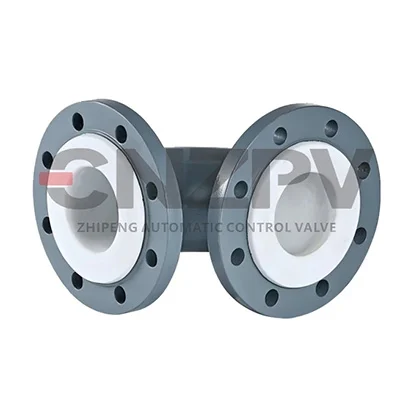
Lined pipe elbows are specifically engineered to address the common issues—such as rapid wear-through, corrosion, and leakage—that affect standard metal elbows in highly corrosive or abrasive environments. By combining the impact resistance and ease of welding/installation provided by a metal outer shell with the corrosion and wear resistance of an internal lining, these elbows offer a service life several times longer than that of standard steel elbows.
The CNZPV range of fluoropolymer-lined elbows includes 90° elbows, reducing 90° elbows, 45° elbows, as well as 30° and 60° elbows. Available lining materials for CNZPV lined pipe elbows include PTFE, PFA, FEP, and anti-static options.
Lined Tees and Pipe Fittings
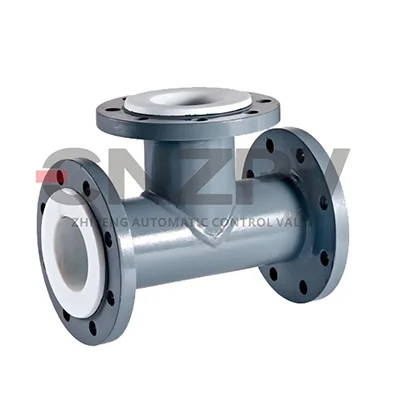
Lined tees and pipe fittings serve as critical branching components in industrial piping systems subject to corrosion and abrasion. They utilize a carbon steel or seamless steel outer shell to provide pressure-bearing capacity, while the inner surface is lined with functional materials—such as fluoroplastics, polyolefins (PO), or rubber—applied via processes like rotational molding or vulcanization.
These fittings retain the mechanical strength and impact resistance of the metal outer shell, while the internal lining acts as a barrier against corrosive or abrasive media (such as acids, bases, salts, or mineral slurries). This prevents the metal substrate from coming into direct contact with the process fluid, effectively overcoming the limitations of pure plastic fittings (which often lack sufficient pressure resistance) and pure metal fittings (which are prone to failure due to corrosion). The tee series includes: equal tees, reducing tees, short-pattern tees, equal crosses, 45° lateral tees, and instrumentation tees.
Summary
Fluorine-lined piping components are widely used in sectors such as chemical processing, pharmaceuticals, environmental protection, and the transport of high-purity fluids. They help significantly reduce the risks of corrosion and leakage, as well as the costs associated with maintenance and component replacement. Please feel free to contact us if you have any requirements.