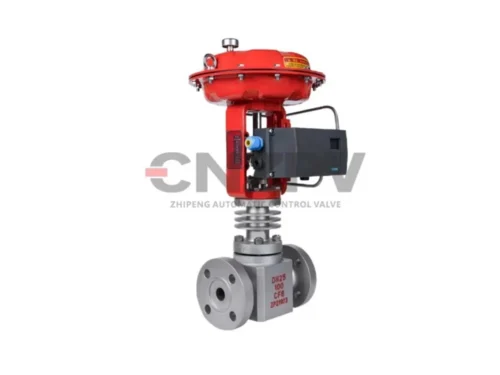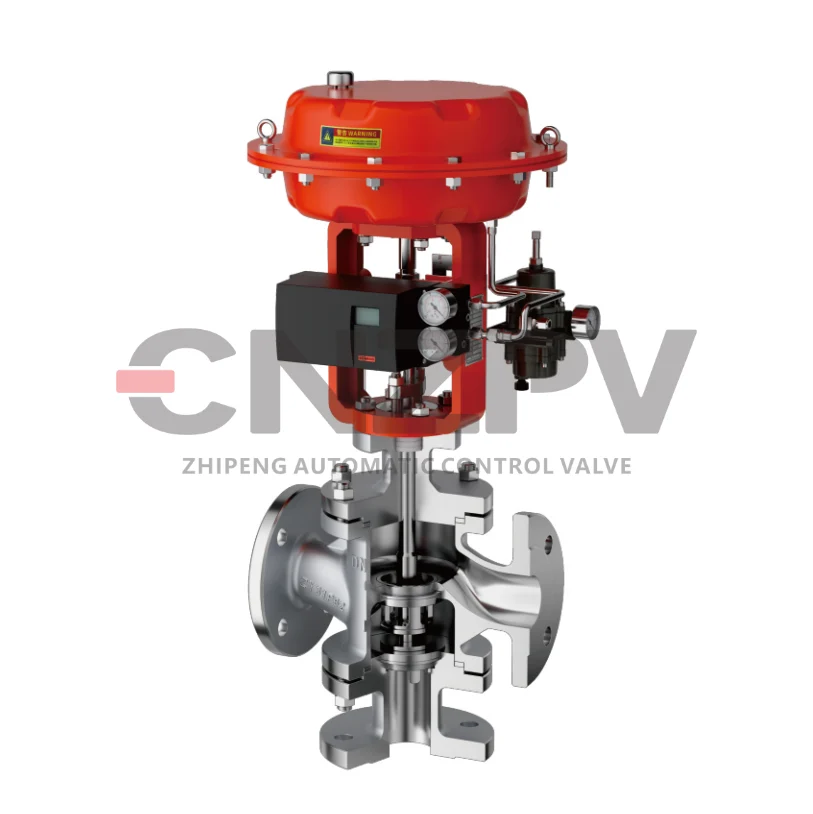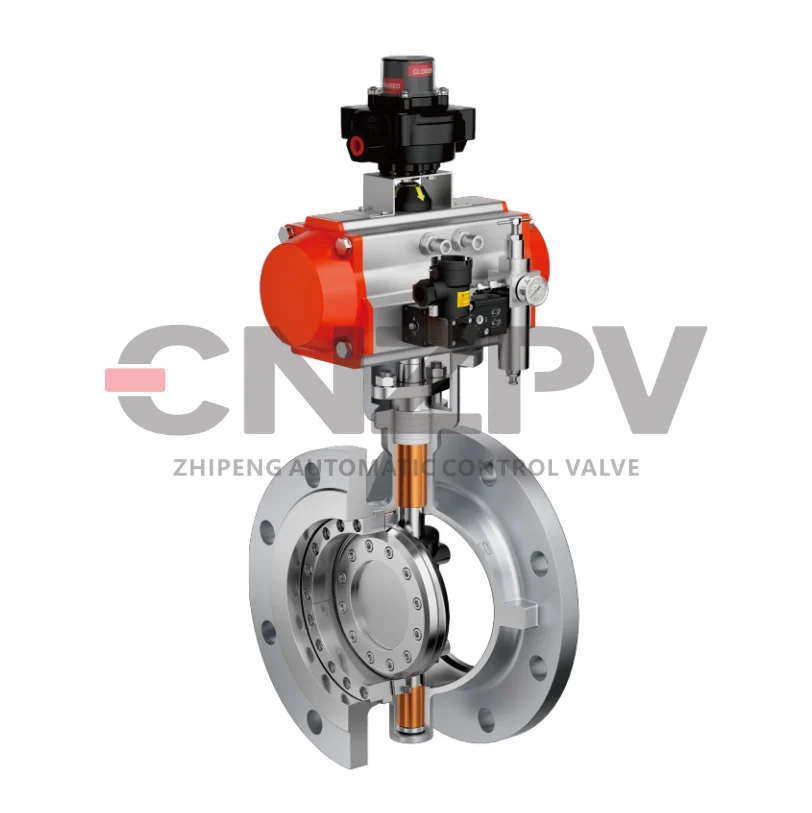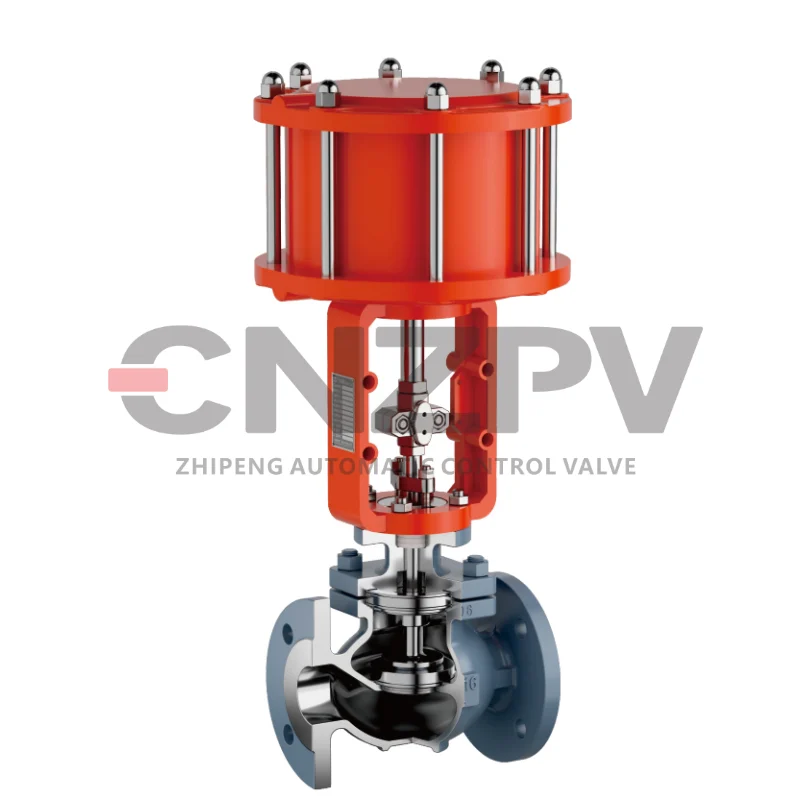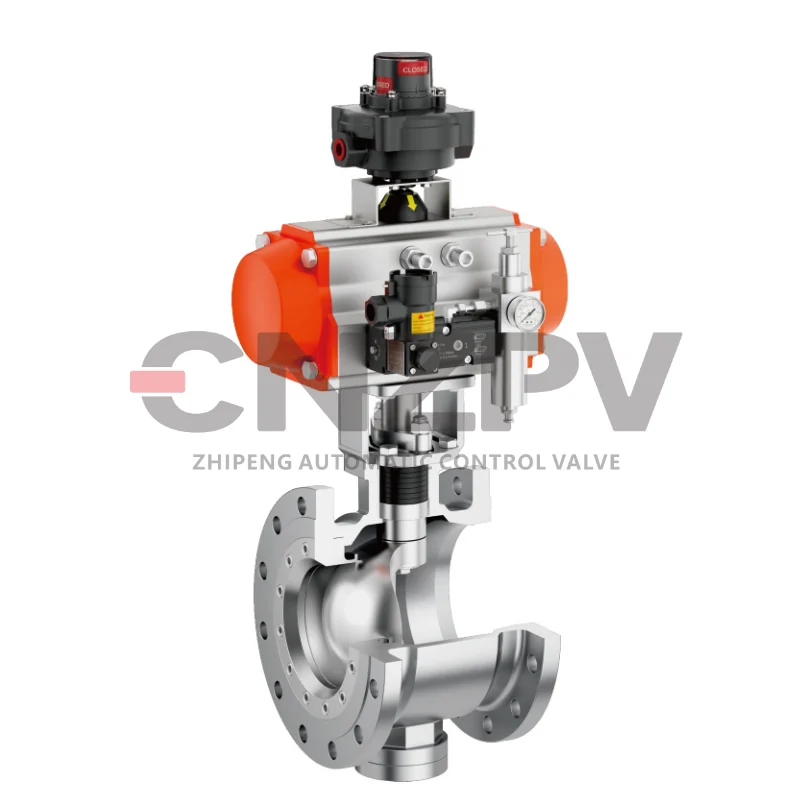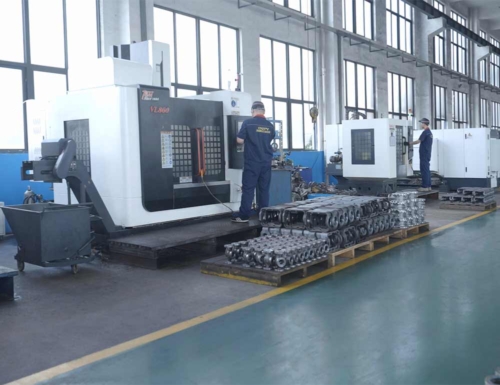
A tank bottom valve is a common valve assembly installed at the bottom outlet of a storage tank or vessel, used for the storage and transfer of materials (liquids or gases). Its primary functions are to control the outflow of material and prevent backflow.
Working Principles
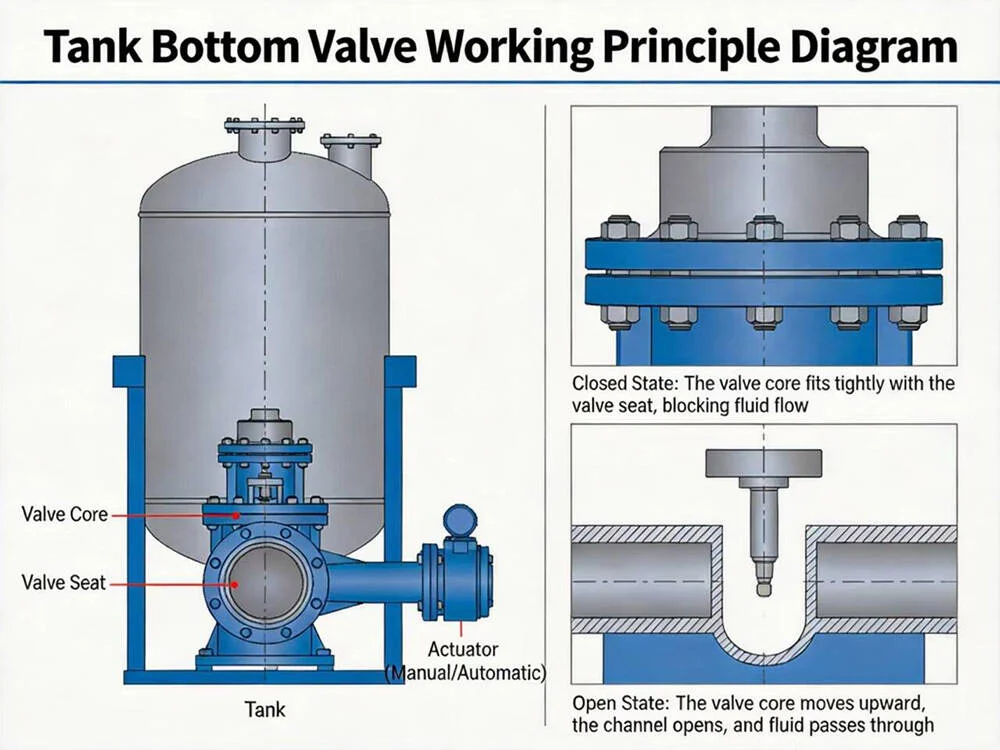
Tank bottom valves control the flow passage area by altering the relative position of the valve disc and the valve seat; material is discharged from the bottom driven by gravity and the static pressure within the tank. Based on their movement mechanism, they are primarily categorized into linear-motion and rotary-motion types:
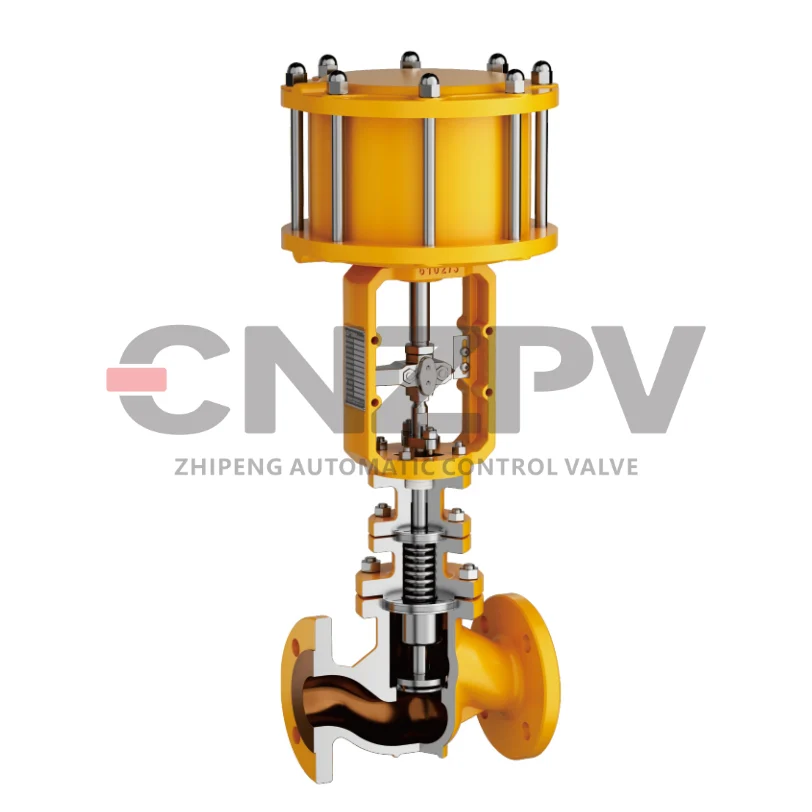
Linear-motion principle: The valve stem drives the valve disc in a linear up-and-down motion to open or close the flow passage. In “upward-opening” (or “rising-disc”) designs, the disc moves upward to open, retracting the valve plug into the vessel; this leaves the flow passage completely unobstructed, ensuring smooth material flow. In “downward-opening” (or “lowering-disc”) designs, the disc moves downward to open; when closed, the pressure of the medium inside the tank assists in pressing the disc against the seat, creating a self-sealing effect that offers superior sealing performance.
Rotary-motion principle: The valve stem drives the valve plug in a rotary motion to open the flow passage. A typical example is the angled-stem tank bottom valve, where the stem is inclined at an angle of 105° to 120° relative to the valve body. Switching is achieved through the rotation of a spherical valve plug; this design is compact, resistant to material jamming, and avoids interference with internal tank agitators.
Features and Functions of Tank Bottom Valves
- Prevention of backflow: When material needs to be discharged from the tank, the valve opens to ensure unidirectional flow; when closed, it effectively prevents the medium from flowing back into the tank.
- Fluid control: By adjusting the valve opening, the outflow rate of the liquid or gas can be precisely controlled.
- Suitability for high-temperature and high-pressure conditions: They utilize materials and sealing designs resistant to high temperatures and pressures, ensuring long-term, reliable operation under harsh conditions.
- Variety of material options: Common materials include stainless steel, cast iron, and copper alloys. Additionally, for highly corrosive media or extreme operating environments, special materials such as titanium alloys and nickel alloys can be selected.
Classification of Tank Bottom Valves
Upward-opening discharge valve
The valve plug opens upwards, leaving the flow path unobstructed. Suitable for high-viscosity materials, fluids containing solid particles, and substances prone to clogging; this is the standard design for reactor discharge.
Downward-opening discharge valve
The valve plug opens downwards, offering excellent self-sealing capabilities. Ideal for applications requiring strict sealing or involving media prone to crystallization at the valve opening; also suitable for vessels with limited space at the bottom.
Piston-type discharge valve
Features a piston-style plug and an extended sealing surface. Capable of withstanding high pressure, it is suitable for high-pressure and high-abrasion slag discharge applications.
Inclined-steam discharge valve
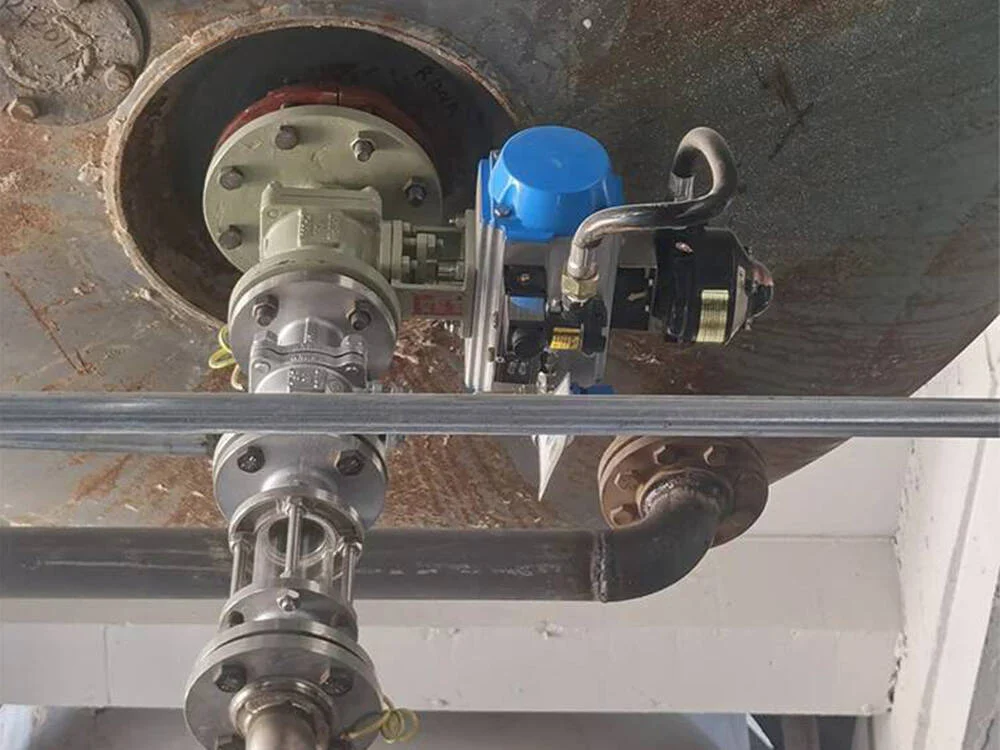
Combines an inclined stem with a spherical plug and rotary actuation. Resistant to particle erosion and requiring minimal installation space, it is ideal for reactors where the agitator is positioned close to the vessel bottom.
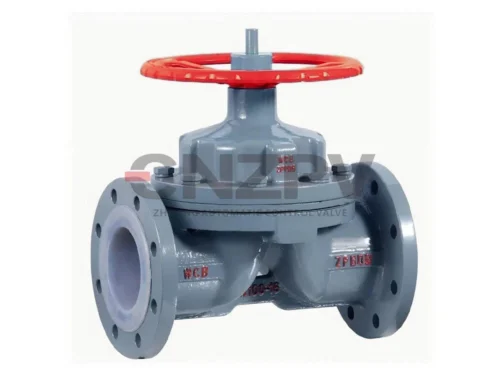
Diaphragm-type tank bottom valve
Operates via diaphragm deformation to control flow. Free of dead zones and easy to clean, it is suitable for sanitary and ultra-pure media applications.
In summary, tank bottom valves play a vital role in the material transfer and storage processes of storage tanks and vessels. They ensure effective material control and safe discharge while preventing backflow and leakage. Widely used across industries such as petrochemicals, chemical engineering, food processing, and pharmaceuticals, these valves are essential for maintaining safe and efficient production operations.